
Choosing an Amethyst Healing Anklet: Colour, Meaning and Everyday Care
I like a piece of jewellery I can put on in the morning without arranging the rest of myself around it. An amethyst anklet can be that small thing: purple against the skin, a few smooth stones, a cord you hardly notice. I would begin with the colour, then turn it over and look at how it is made.
Begin with the purple you like
Amethyst is purple quartz. It varies in colour from light to dark purple, sometimes nearly black. It can also be light to dark bluish-violet. The purple of amethyst varies from the palest tints to a rich grape-purple. Some deep stones are called Siberian amethysts. These can be a reddish purple under a lamp, but a fine violet by daylight.
I would look at an anklet near a window as well as under a lamp. A pale lilac chip and a deep purple one need not look alike to sit happily on the same cord. Choose the colour you want to see against your own skin.
The beauty of a precious stone or gem consists of its colour or colourlessness, brilliancy or softness of lustre, and transparency. The changes of fashion have much to do with determining the market value of precious stones. Amethysts and opals have been eagerly sought for at times. Then they have been passed over for other gems, changing what people will pay for them.
That is a good reason to follow your own eye. I would rather have a colour I enjoy than a stone chosen because someone else calls it fashionable.
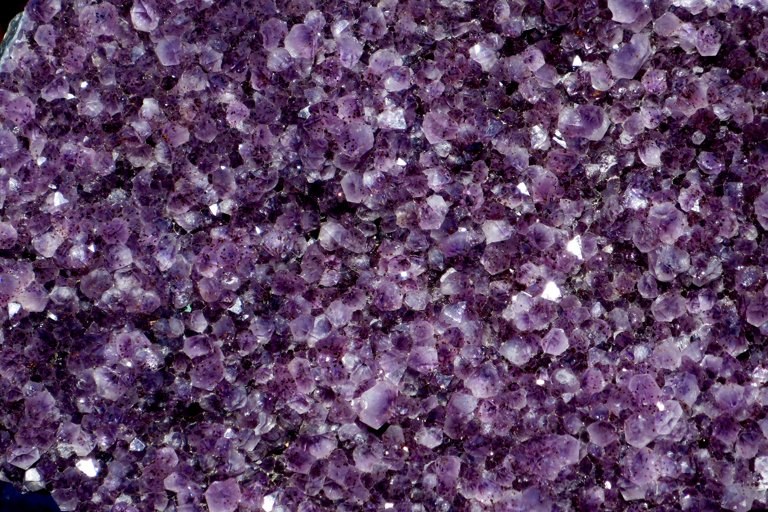
Amethyst crystals photographed by Lisa Ann Yount. Pale and deeper purple appear together. — Lisa Ann Yount / Wikimedia Commons

Give the stone a meaning of your own
Amethyst has a long link with the idea of a clear head. Its name comes from an old belief that the stone could keep a person from getting drunk. George Frederick Kunz wrote about this belief in his book on gems. He thought the purple colour, so much like wine, may have helped give rise to the story.
That is the old belief recorded by George Frederick Kunz. For me, the useful thought is composure: a reminder to pause before carrying the day's hurry into the next room. You can give an anklet that meaning without needing a long ritual every time you put it on.
Look beyond the bead to the finish
To take a high and lasting polish, a mineral must be hard. Many stones that would otherwise be highly valued are low in the estimate of worth because they do not possess sufficient hardness to make them endure the wear and friction to which a precious stone is subjected when used in the form of jewellery.
The stone is not finished merely because it has been cut. The facets are flat, but have a rough ground-glass-like surface. The polishing is usually done by workers who do not cut stones, but who do nothing but polish them. In small shops, however, the same lapidary performs all the parts of the work. Each gem material requires special treatment to obtain the best results.
On an anklet, I would feel the edges that will touch the skin. Look at the holes through the beads, too, and the cord where it passes through them. A pretty arrangement still needs smooth surfaces and a fastening you can manage yourself.
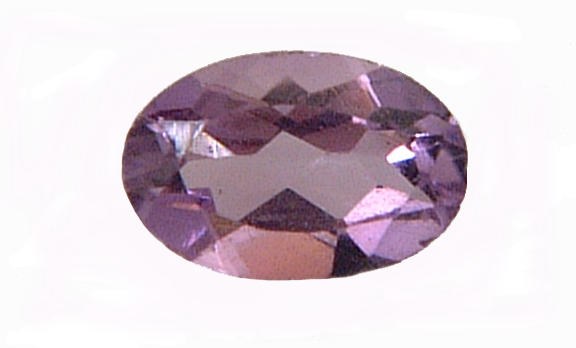
A cut and polished amethyst. Its flat faces catch the light. — Darla Sondrol / GeoDIL, image 1742 (CC0)
.jpg)
Wear it with a little room to move
By hardness is meant the ability to resist scratching. The term “hardness” should not be taken to include toughness, yet it is frequently so understood. Most hard stones are more or less brittle and would shatter if struck a sharp blow. True hardness, then, implies merely the ability to resist abrasion, or scratching.
Amethyst scores 7 on the Mohs scale of hardness. The scale puts stones in order by how hard they are. The gaps between the numbers are not equal. A score of 8 does not mean a stone is just a little harder than one that scores 7.
Quartz is fairly tough, which makes it useful in jewellery. But over time, dust and rubbing can dull its sharp edges. Common dust contains bits of quartz, too. Old amethysts worn in rings can show this wear.
I would fasten an anklet with room to move, then walk a few steps. If it presses under a shoe strap, catches, or rubs, adjust it or take it off. The cord and the knot deserve as much attention as the stones.
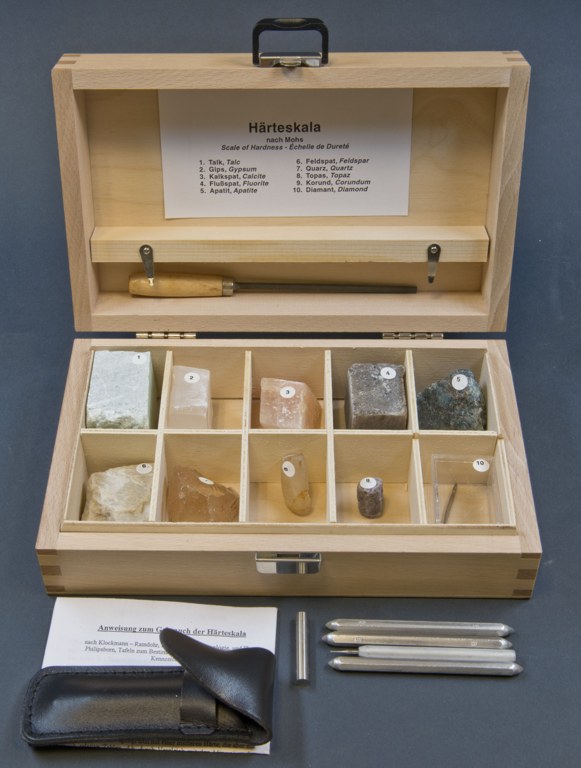
A Mohs hardness kit puts minerals in order from 1 to 10. Quartz, the mineral family of amethyst, is number 7. Image resized. — Hannes Grobe / Wikimedia Commons (CC BY 3.0)

Put it away as carefully as you put it on
A little care prevents unnecessary wear. Keep the anklet separate from harder jewellery. Diamond will scratch all the other minerals in the Mohs series; sapphire will scratch any but diamond, and topaz will scratch any but diamond and sapphire. Hardness is very necessary in a precious stone in order that it may receive and keep a fine polish.
For amethyst itself, GIA recommends warm soapy water and advises against steam and heat. Strong light over long periods can fade some stones. With a corded anklet, follow the maker's cord-care instructions as well; I would not assume that a stone-cleaning method suits the whole piece.
An anklet with those details in mind
The Amethyst Healing Anklet combines natural amethyst chips with a carved amethyst rose on double-strand black waxed cord. A sliding knot adjusts the fit, without metal parts.
I like the flower beside the irregular chips. There is enough to look at without needing to add anything else: the purple you chose, a small detail under your fingers, and whatever quiet meaning you decide to carry with it.
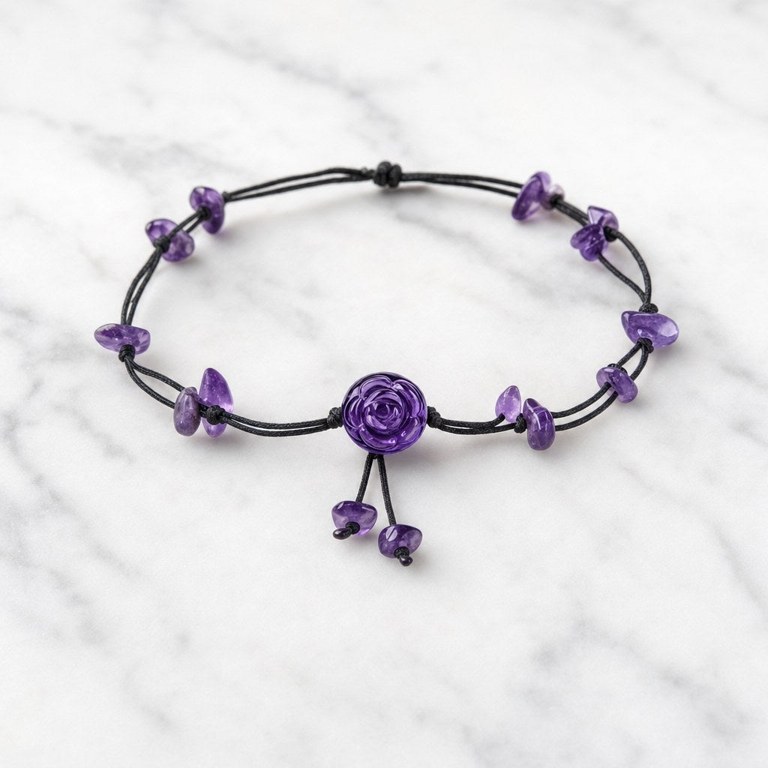
The current anklet: amethyst chips, a carved rose and an adjustable black cord.
Michele Bruns
About Michele Bruns

Michele Bruns works out of the dining room of a brick ranch in Kettering, Ohio. After the last child left she bought a folding table, a sheet of linen, and a weekend reflexology certificate in Dayton. She puts one object on the sideboard and leaves it while people come and go. If you ask, she will tell you where she put it. She will not give a speech.