
The 9 Essentials I Look For in a Spiritual Protection Bracelet
From my bead table: color, comfort, and the meaning you carry with you.

I string malas at a card table in South Tucson. There is a faded beach towel under the beads so they don’t roll onto the linoleum. I start with the object in my hands. With a spiritual protection bracelet, I want to understand the stones before I decide what their meaning is to me.
I have been reading George Frederick Kunz’s 1913 The Curious Lore of Precious Stones. The historical passages here are adapted from that book. Many of these ideas have their roots either in some intrinsic quality of the stones or else in an instinctive appreciation of their symbolical significance. Through manifold transformations this symbolism has persisted to the present day.
Here are the nine things I come back to, with the beads on the towel in front of me.
1. The beauty of the stone
I notice color first. The love of precious stones is deeply implanted in the human heart, and the cause of this must be sought not only in their coloring and brilliancy but also in their durability.
2. An idea that can be carried
My Catholic childhood makes this distinction familiar to me. It is not the object itself, but the idea for which it stands and which it incorporates, that gives confidence to the wearer, and in this sense the wearing of a talisman is no more a proof of blind superstition than is the devotion to a flag, in itself only a few square feet of silk or bunting, but, nevertheless, the symbol of the noblest ideas and feelings, of patriotic devotion to one’s native land and to one’s fellow-countrymen. I want a meaning I can remember when I look down at my wrist.
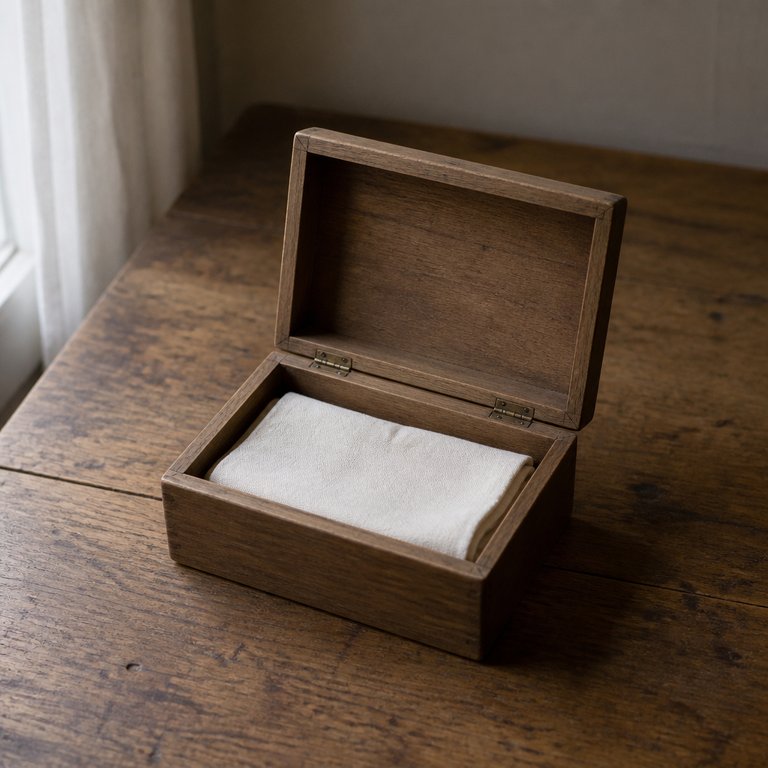
3. Something simple enough to wear
My fingers remember the counting. A strand has to move easily through them. Probably the first objects chosen for personal adornment were those easily strung or bound together: for instance, certain perforated shells and brilliant seeds. The softer stones, wherein holes could be easily bored by the help of the simplest tools, probably came next, while the harder gems must have been hoarded as pretty toys long before they could be adjusted for use as ornaments.
For a bracelet I check the fit, too. Something too tight is going to spend its days in a drawer.
4. Room for different meanings
I don’t expect everyone at a bead table to see the same thing in a color. Kunz describes how associations changed between traditions. In classical mythology this showed itself in the ascription of green stones to Venus, as the exponent of the reproductive energies of nature, while in the Christian conception these stones became typical of the resurrection, of the birth into a new and purer life. Nowhere can we find a better illustration of the transforming effect of distinct and diametrically opposite concepts upon the impressions made by natural objects. I can appreciate both meanings without needing to choose one for somebody else.
5. A history longer than any one design
I like knowing that a small thing in the hand has such a long history. The use of precious stones in early times as amulets and talismans is shown in many ancient records, and several scholars have assumed that the belief in the magic efficacy of stones gave rise to their use as objects of personal adornment. It is, of course, very difficult either to prove or to disprove such a theory. Even in the case of the oldest texts, they do not represent the beginning of the custom, and many thousands of years must have elapsed before a people could attain the conditions necessary for the production of even the simplest literature.
The Metropolitan Museum's lapis lazuli amulet is one surviving example of an ancient object. I look at it as a trace of another person’s life, long before my own.
6. The blue stone behind an old name
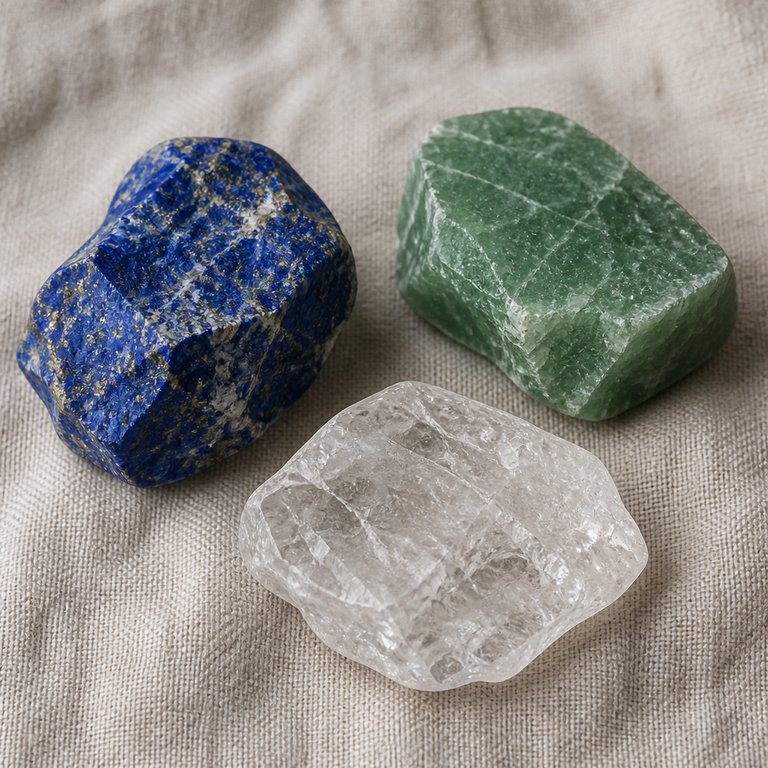
Lapis is the blue I linger over. Both in Babylonia and in Egypt, lapis-lazuli was very highly valued, and this is shown by the use of its Assyrian name, uknu, in poetic metaphor. In ancient times lapis-lazuli was the blue stone par excellence, because of its beautiful color and the valuable ultramarine pigment derived from it.
Kunz notes that both Theophrastus and Pliny describe the sapphirus as a stone with golden spots, thus showing that they meant lapis-lazuli, which is often spotted with particles of pyrites having a golden sheen. The name is composed of the Latin lapis, a stone, and lajuward, the name of the stone in Persian. From this latter word is also derived our azure.
Modern GIA material guidance describes lapis as a rock composed of several minerals. That helps me look more closely at the blue and golden flecks, instead of expecting every bead to be identical.
7. What an amulet was meant to do
I don’t get far with the word “protection” until I ask what the wearer wants to hold away. Kunz traces the old word amulet through several explanations. Pliny’s use of amuletum shows that with him the word did not always denote an object that was worn on the person, although this later became its meaning.
The old etymology given by Varro (118-29 B.C.), who derived amuletum from the verb amoliri, to remove, to drive away, may not be quite in accord with modern philology, but still has something to recommend it as far as the sense goes, for the amulet was certainly believed to hold dangers aloof, or even to remove them.
I hear the same wish in the name of a protection bracelet. What someone hopes for matters to me, even when the words for it have changed.
8. Belief and evidence
I keep the history and the promise separate. The influence exerted by precious stones was assumed in medieval times without question, but when the spirit of investigation was aroused in the Renaissance period, an effort was made to find a reason of some sort for the traditional beliefs. There was little disposition to doubt that the influence existed; this was taken for granted, and all the mental effort expended was devoted to finding some plausible explanation as to how precious stones became endowed with their strange and mystic virtues.
I can value a stone without treating it as a guarantee that nothing will happen to me.
9. A meaning that remains personal
I keep a finished strand on a nail by the kettle. A thing can have its place in a day. This use of signs and symbols is something entirely and radically different, for the idea is never lost sight of, it is only strengthened and vivified by the contemplation of the symbol. Hence, while we know quite well that the symbol is nothing in itself, we know just as well that it has a real power in its relation to the idea it typifies, and we can no more be indifferent to its injury or destruction than we could be indifferent to the injury or destruction of a cherished memento of one whom we have loved and lost.
Those are my essentials: something I like looking at, something I can wear, a little knowledge of its history, and room for my own meaning. I wouldn’t ask another person to carry mine.
The blue and black I would look at together
All the fair colors of flowers and foliage, and even the blue of the sky and the glory of the sunset clouds, only last for a short time, and are subject to continual change, but the sheen and coloration of precious stones are the same to-day as they were thousands of years ago and will be for thousands of years to come.
In a world of change, this permanence has a charm of its own that was early appreciated. That is the part of Kunz’s book I carry back to the bead table.
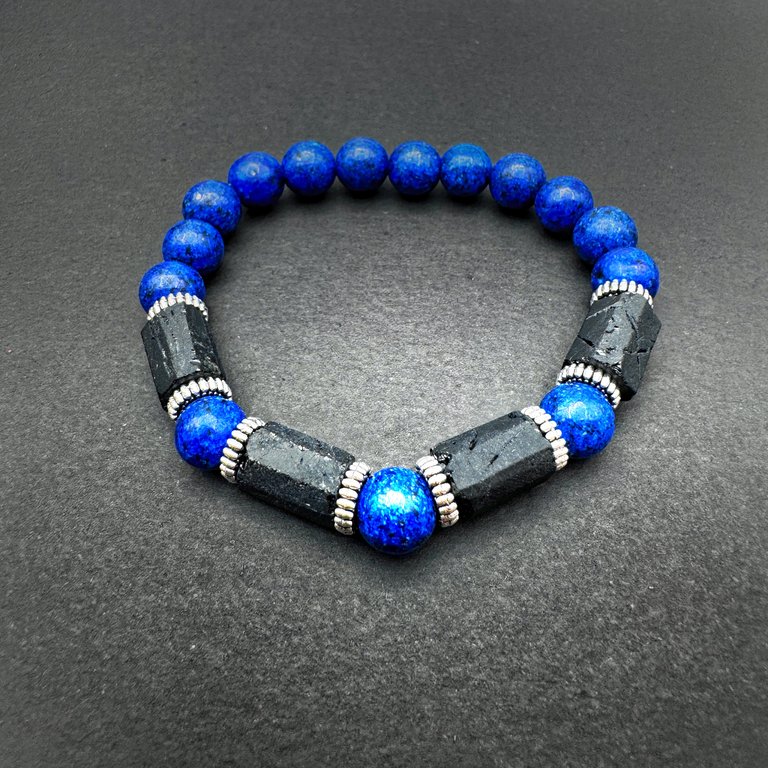
I’m drawn to the blue beside the long black sections in the Psychic Protection Bracelet. It pairs lapis lazuli with black tourmaline, with silver-colored spacers between them. I would start there, with those materials and that contrast, and check the fit before anything else.
The meaning is something I would leave room to grow into. You can take your time with a small thing you intend to wear.
Gloria Cardenas
About Gloria Cardenas
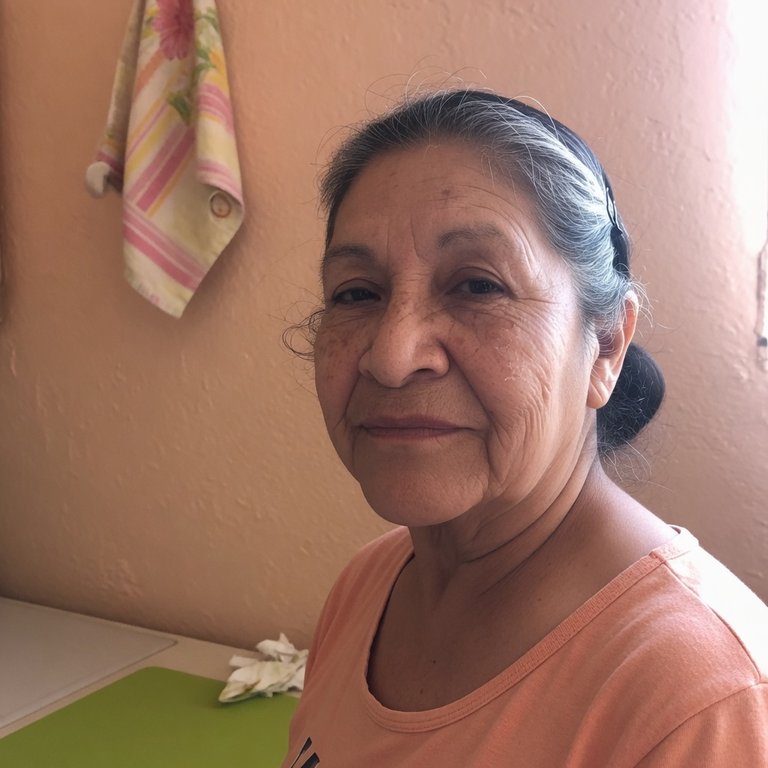
Gloria Cardenas lives in South Tucson, in the stucco house she bought in 1988. She strings malas at a card table with a faded beach towel under the beads so they don't roll onto the linoleum. A sitting-group teacher in the late nineties made her count 108 without looking down. She still does it that way. She keeps one finished strand on a nail by the kettle.